

What are ASA Snapshot Reports?
ASA Snapshot Reports provide a quick, data-driven view of how effectively the advertising rules are being followed across specific sectors.
They use insights from our AI-based Active Ad Monitoring system to measure compliance levels, highlight good practice, and identify emerging risks.
Overview
This Snapshot Report examines the extent to which people aged under 25 feature in social media and online display ads in the gambling and alcohol sectors. The rules for these sectors are clear that people who are, or seem to be, under the age of 25 cannot play a prominent role or be seen gambling or drinking.
Our findings show that the vast majority of advertisers in these sectors play by the rules and don’t take risks when it comes to the age of people in their ads. Where issues were identified in the minority of ads, we found that organic social media ads involving advertisers sharing user-generated content presented a higher risk than other ad types. In addition, a greater proportion of alcohol ads were at risk of breaching the rules compared to gambling ads.
This report serves as a reminder of the rules and gives advertisers the opportunity to address potential risks in their advertising. We will continue to monitor these sectors to ensure children and young people are protected from irresponsible ads and that there is a level playing field for advertisers.
Findings
Our Active Ad Monitoring system captured around 13,000 unique paid-for and organic ads for alcohol or gambling published online between July 2025 and November 2025. Of these, our AI-assisted age-prediction model identified 4,841 ads containing human faces. Ads our model flagged as containing people who may be under 30 were reviewed and categorised by our experts to assess the likelihood of them breaching the advertising rules. Our experts then assessed whether those in the ads seemed to be, or actually were, under 25. We found:
- Unlikely breaches of the Code (Green): 90.6% of all ads containing faces were given a “Green” rating. These ads featured people clearly aged over 25 playing a significant role or drinking or gambling.
- Possible breaches of the Code (Amber): 7.8% of all ads containing faces were given an “Amber” rating where there was a risk that some people would perceive a person in the ad as being under the age of 25 (but not obviously so).
- Clear breaches of the Code (Red): 1.7% of all ads containing faces were given a “Red” rating. We confidently identified the age of a person in those ads as being under 25 or seeming to be under the age of 25. This was determined by the person’s appearance, and/or other visual indicators, such as the setting, clothing or tagged accounts (for example, the tagging of a university).
Alcohol ads
Figure 1: Categorisation of alcohol ads featuring faces in all online media
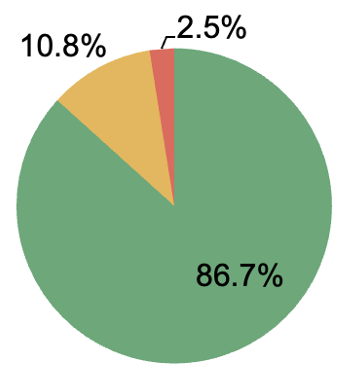
2.5% of alcohol ads were red and 10.8% were amber. The highest risk ad types were organic (e.g. posts) and influencer ads, particularly where advertisers shared user-generated content featuring people’s faces. Such ads might not be subject to the same level of compliance scrutiny as would likely to be the case for ads appearing in paid-for space online. In addition, a small number of brands partnered with influencers who were under 25.
Seven alcohol advertisers were responsible for the red-rated ads. One advertiser had published a number of ads which prominently featured UK university students which did not reveal their exact ages. We referred this advertiser for formal ASA investigation, resulting in an upheld ruling.
We contacted the other advertisers who were identified as having published non-compliant ads. They provided formal assurances that appropriate age checks will be carried out in future.
Gambling ads
Figure 2: Categorisation of gambling ads featuring faces in all media
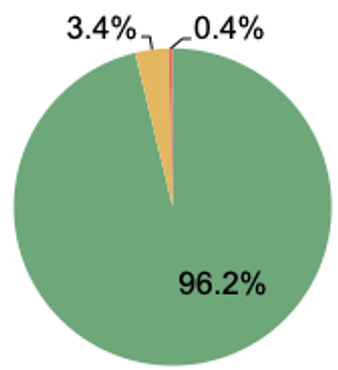
Compliance rates were high with 0.4% of ads identified as red and 3.4% identified as amber. The majority of those related to organic ads (e.g. posts). Ads rated as red were from one advertiser only. We contacted the advertiser and received an assurance that appropriate age checks will be carried out in future.
Conclusion
Our findings indicate that a small percentage of online alcohol and gambling ads feature a person who is or clearly appears to be under the age of 25, in clear breach of the advertising rules. They also identified some areas of greater risk. In particular, organic ads that share user-generated content on social media were a higher risk of being problematic. Alcohol ads were also more likely to be flagged as high risk than gambling ads.
We have already secured assurances from advertisers who were identified as running non-compliant ‘red’ ads. We will share our findings with stakeholders and will continue to monitor these sectors to ensure children and young people are protected from irresponsible ads.
How did we carry out this monitoring?
- We identified the UK’s most popular alcohol and gambling brands, focusing on those that had past or current links to youth culture. We also monitored advertisers with a history of rule breaches and relevant influencers active in these sectors.
- We reviewed ads from these companies served to UK users across display and social media platforms.
- Using our Active Ad Monitoring system, we captured ads from a wide range of gambling, alcohol and influencer accounts across both paid and organic advertising. We then used AI and age-prediction models to assess whether ads for alcohol and gambling featured people likely to be under 30.
- Ads flagged as being at risk of featuring someone who was, or appeared to be, under 30 were then reviewed by our human experts and categorised according to our RAG scale (above). Our experts further assessed ads based on the risk of the person being aged under 25 or seeming to be under 25.
- We referred these ads to our experts to assess compliance with the Alcohol and Gambling sections of the advertising rules, specifically:
- 16.3 Marketing communications must not:
- 16.3.14 include a child or a young person. No-one who is, or seems to be, under 25 years old may be featured gambling or playing a significant role. No-one may behave in an adolescent, juvenile or loutish way.
Individuals who are, or seem to be under 25 years old (18-24 years old) may be featured playing a significant role only in marketing communications that appear in a place where a bet can be placed directly through a transactional facility, for instance, a gambling operator's own website. The individual may only be used to illustrate specific betting selections where that individual is the subject of the bet offered. The image or other depiction used must show them in the context of the bet and not in a gambling context. -
18.16 People shown drinking or playing a significant role must neither be nor seem to be under 25. People under 25 may be shown in marketing communications, for example, in the context of family celebrations, but must be obviously not drinking.